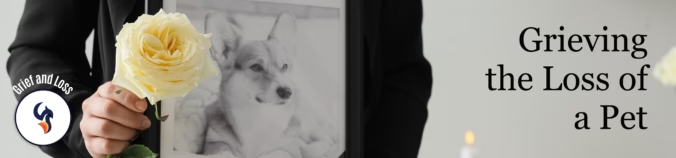
Pets can become some of the most meaningful relationships in our lives. They share our homes, our routines, and often our most difficult and happiest moments. For some, pets may be their only source of unconditional love and protection. For many, they are a consistent source of comfort when managing difficult emotions. When a pet dies, the grief can be profound because it means losing a companion who was part of everyday life.
The Loss of a Pet is a Real Loss
Despite how meaningful the relationship can be, grief after the death of a pet isn’t always fully recognized or understood by others. You may hear things such as, “You can always get another pet,” or feel pressure to move on more quickly than you’re ready to. This can be a form of disenfranchised grief, which is grief that isn’t fully recognized or supported by others.
The depth of your grief isn’t determined by whether others understand it. The loss of a pet is a real loss, and your grief deserves to be acknowledged.
Interested in Therapy Options?
Schedule a Free Intake Online with our Intake Coordinator. We can help walk you through all options and answer any questions you may have.
Our relationships with pets are often woven into the routine of everyday life. When they die, their absence can be felt in both big and small ways. You might grieve:
Their companionship and physical presence
The routines you shared together
The comfort or sense of safety they provided
The role they played during an important chapter of your life
The future you imagined having with them
You may still expect to see them in their favorite spot or find yourself missing the routine that is no longer there. These moments can be painful reminders of how deeply they were part of your life.
Grief Can Look Different for Everyone
There is no right or wrong way to grieve the death of a pet.
You may feel sadness, loneliness, numbness, guilt, anger, or even relief if your pet had been suffering. If you had to make the decision to euthanize your pet, you may find yourself replaying the decision or wondering if you did the right thing, even when the decision was made out of love and a desire to prevent further suffering.
Grief has room for many mixed emotions. The circumstances surrounding your pet’s death, the relationship you shared, and other losses happening in your life can all shape your experience of grief.
How the Loss of a Pet Can Affect Us
The grief of losing a pet can show up in ways we don’t always expect. You might notice:
Feeling lonely or disconnected
Missing their comfort and companionship
Feeling guilt or questioning decisions you made about their care
Feeling a sense of emptiness at home
Avoiding reminders because they feel too painful
Experiencing waves or sudden bursts of grief weeks, months, or even years later
These reactions often reflect the significance of the relationship and the bond you shared.
Interested in Therapy Options?
Schedule a Free Intake Online with our Intake Coordinator. We can help walk you through all options and answer any questions you may have.
One of the difficult parts of grieving a pet can be wondering what it means to move forward. For many, healing means finding a way to carry the love and memories you shared while gradually learning to live with their absence.
Over time, some people find meaningful ways to honor their pet, such as:
Looking through photographs or sharing memories with others
Creating a memorial
Keeping a meaningful item, such as a favorite toy or collar
Journaling about what the relationship meant to you
Continuing a tradition that reminds you of them
Giving Yourself Permission to Grieve
If you’ve lost a pet and find yourself grieving, remember that you don’t have to minimize your pain because others may not understand the relationship you shared. There is no deadline for grieving someone who was an important part of your life. Over time, grief may change and the pain of their absence may become less constant, while the memories and love you shared remain.
What did your relationship with your pet mean to you? What might you need to give yourself permission to grieve?
If you’re struggling with the loss of a pet, therapy can provide a space to acknowledge your grief, honor the relationship you shared, and make sense of the many emotions that can come with loss. Healing can involve learning how to carry their memory and the love you shared with you.
Learn More about Michael Marsteller, Experiential Trauma Therapist
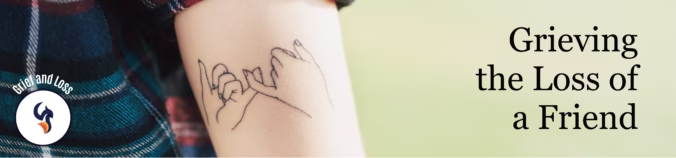
Friendships can become some of the most meaningful relationships in our lives. Friends may know our history, witness important chapters in our lives, and provide a sense of belonging and connection. When we lose a friend, the grief can be profound, even when others don’t always recognize it as such.
A friendship can be lost in many ways. Sometimes we grieve the death of a friend. Other times, we grieve the loss of a friendship because of distance, conflict, betrayal, changing circumstances, or simply growing in different directions. The person may even remain in your life while the relationship you once knew changes or comes to an end.
Friendship Loss is Still Loss
Grief after losing a friendship can be complicated because it doesn’t always receive the same recognition or support as other forms of loss.
There may be no funeral, no clear ending, or even an opportunity to say goodbye. You may find yourself questioning whether you’re “allowed” to grieve a friendship that ended or changed.
This can be a form of disenfranchised grief, which is grief that isn’t fully recognized or supported by others. Because friendships don’t always receive the same recognition as other relationships, you may feel pressure to “move on” before you are ready.
The end of a meaningful friendship can mean losing shared memories, traditions, routines, inside jokes, and the feeling of being known by someone who understood an important part of your life.
Interested in Therapy Options?
Schedule a Free Intake Online with our Intake Coordinator. We can help walk you through all options and answer any questions you may have.
The circumstances surrounding a friendship loss can shape how we grieve. A friendship may be lost in different ways, including:
Death: Grief may involve sadness, shock, anger, or a deep sense of missing someone who was a part of your everyday life.
Conflict or betrayal: Grief may include anger, confusion, regret, or questions about what went wrong.
Growing apart: The loss can be harder to name, especially when there isn’t one specific moment when the friendship ended. This can be a form of ambiguous loss, which is a loss that is real but doesn’t always have a clear ending or social recognition.
There is no single way to grieve a friendship. ways it shaped your life.
How Losing a Friend Can Affect Us
The loss of a friendship can show up in ways we don’t always recognize as grief. You might notice:
Missing someone you once turned to for support or connection
Feeling lonely or disconnected from others
Replaying conversations or wondering what you could have done differently
Feeling anger, sadness, guilt, or regret
Missing shared traditions, routines, or memories
Feeling hesitant to trust or become close to others again
Experiencing waves of grief when something reminds you of the friendship
These reactions don’t mean you’re overreacting. They often reflect how meaningful the relationship was.
Healing Doesn’t Mean the Friendship Didn’t Matter
Sometimes we think healing means we need to stop missing the person or completely move on from the relationship.
But healing doesn’t require us to erase what the friendship meant to us.
We can acknowledge what the relationship gave us, grieve what was lost, and carry the meaningful parts of that experience forward. Sometimes healing also means accepting that a relationship was important to us even if it could not continue in the same way.
Some friendships last a lifetime. Others are part of a particular season of our lives. Their length doesn’t determine their significance.
Interested in Therapy Options?
Schedule a Free Intake Online with our Intake Coordinator. We can help walk you through all options and answer any questions you may have.
If you’ve lost a friend and find yourself struggling with the loss, you don’t have to minimize your grief simply because someone else might not understand it. There is no timeline for grieving a relationship that mattered to you.
Healing often begins by giving yourself permission to acknowledge what was lost, rather than judging yourself for still caring. Over time, grief can make room for gratitude, acceptance, and new connections while still honoring the relationship that once mattered.
What might you need to acknowledge or grieve about a friendship you’ve lost?
If you’re struggling with the loss of a friendship, therapy can provide a space to explore the many emotions that can come with grief, make sense of what happened, and find a way forward while honoring what the relationship meant to you.
Learn More about Michael Marsteller, Experiential Trauma Therapist
The death of a parent is one of life’s most profound losses. Whether it happens in childhood or adulthood, it often changes us in ways we never expected.
When a parent dies, we aren’t only grieving the person we lost. We are also grieving the relationship we shared, the role they played in our lives, and the future we imagined together. We may miss their guidance, the traditions we shared, or simply knowing they were there.
Because of this, grieving the death of a parent often touches every part of our lives.
Grief Looks Different for Everyone
Grief doesn’t follow a predictable timeline, and it rarely looks the way we expect.
Some people feel overwhelmed by sadness, while others feel numb or disconnected. Some experience relief after a parent’s long illness and later feel guilty for that relief. Others don’t fully feel the loss until months or even years later. All of these responses can be part of grief.
The relationship you had with your parent also shapes how you grieve. If your relationship was loving and supportive, you may deeply miss that source of comfort and security. If the relationship was complicated, distant, or painful, grief may include anger, regret, relief, or all of these at once. No two parent-child relationships are exactly alike, and no two grief journeys will be either.
Grief has room for mixed emotions.
How the Death of a Parent Can Affect Us
The loss of a parent can reach far beyond the initial weeks and months after their death. You might notice:
Feeling less grounded in the world
Numbness or emotional disconnection
A heightened awareness of your own mortality
Missing the person you would normally turn to for guidance or reassurance
Feeling alone during milestones, holidays, or family gatherings
Changes in your sense of identity or your role within the family
Waves of grief that return unexpectedly, even years later
These experiences don’t necessarily mean something is wrong. They often reflect the significance of the relationship and the many ways it shaped your life.
Interested in Therapy Options?
Schedule a Free Intake Online with our Intake Coordinator. We can help walk you through all options and answer any questions you may have.
One of the most common fears people have is that healing somehow means forgetting the person they loved or “moving on.”
In reality, healing isn’t about letting go of your parent. It’s about learning how to carry their memory while continuing to live your own life.
Over time, many people find meaningful ways to stay connected to their parent’s memory, such as:
Telling family stories
Cooking a favorite recipe
Carrying forward values your parent taught you
Looking through old photographs
Talking to them in your thoughts
Love doesn’t end when someone dies, and neither does the bond we shared with them.
While the bond may change over time, it doesn’t have to disappear.
Giving Yourself Permission to Grieve
Our culture often expects grief to follow a timeline: a few weeks of mourning, then a gradual return to normal. But grief doesn’t work that way.
There is no deadline for missing someone who mattered deeply.
Healing often begins when we give ourselves permission to experience our grief rather than judge it. It means allowing space for sadness, remembering with compassion, and recognizing that grief can coexist with moments of joy, laughter, and hope.
If you’ve lost a parent and find yourself wondering why the grief still feels present months or even years later, know that you are not alone. Grief doesn’t disappear because time has passed. Instead, it changes as we change.
How has the loss of your parent continued to shape your life?
If you’re ready to explore that question, therapy can provide a place to honor that relationship, process the many layers of your loss, and discover ways to move forward without leaving your loved one behind. Healing doesn’t mean forgetting. It means learning to carry your grief with greater compassion, resilience, and hope.
Interested in Therapy Options?
Schedule a Free Intake Online with our Intake Coordinator. We can help walk you through all options and answer any questions you may have.
When we think about grief and loss, we often think about the death of someone we love. While that is certainly one form of grief, it’s not the only one. Many of us experienced childhood loss that was never recognized as grief. These losses can take many forms, including:
A parent’s divorce or separation
The death of a grandparent or another important caregiver
Moving away from friends, family, or familiar surroundings
Growing up with a parent or family member struggling with addiction
Emotional neglect or inconsistent care-giving
Living with chronic illness
Bullying or peer rejection
Growing up in an unpredictable or unsafe home
The loss of safety, stability, or innocence
The childhood you needed but never had
While each of these experiences is different, they can all represent meaningful losses that deserve to be acknowledged. Many of them can involve ambiguous loss—a loss that is real and deeply impactful, but often lacks clear closure or social recognition. Because these losses aren’t always acknowledged as grief, we may carry their effects without realizing we’re grieving in the first place.
Although these losses happened in childhood, they don’t always stay in the past. They can influence how we experience relationships, respond to conflict, view ourselves, and even what feels safe or familiar. The ways we learned to seek comfort, protect ourselves, or connect with others in childhood often become the blueprint for our relationships in adulthood. Instead of asking, “What’s wrong with me?” we can begin asking, “What happened to me?”
How Children Adapt to Loss
As children, we often don’t have the language or emotional capacity to make sense of our losses. Instead of grieving them, we adapt.
Many of us learn to become independent because asking for help didn’t feel safe. We may become the “responsible one” because someone had to hold things together. Some of us will learn to people-please in an effort to avoid conflict or rejection. We stay emotionally guarded because vulnerability once led to disappointment.
These adaptations are often incredibly resourceful. They helped us survive difficult circumstances.
When Childhood Survival Strategies Follow Us Into Adulthood
The challenge is that the strategies that once protected us can begin to limit us. What helped us survive childhood may make it difficult to trust others, ask for help, or believe we’re worthy of care as adults.
These unresolved losses can show up in ways we don’t immediately recognize. For example, you might notice:
Difficulty trusting others or asking for help
Fear of abandonment or rejection
Feeling responsible for other people’s emotions
Believing you have to earn love through achievement or care taking
A persistent sense that something is missing, even when life appears to be going well
This doesn’t mean that every struggle in adulthood is rooted in childhood grief and loss. The human experience is complex, and there are many reasons people may experience anxiety, depression, relationship difficulties, or low self-worth. But for some people, early losses are an important part of the story, especially when those losses were never acknowledged or processed.
Healing Begins by Acknowledging What Was Lost
One of the most powerful aspects of therapy is having a safe space where you can finally acknowledge those losses with compassion. Grieving isn’t about staying stuck in the past. Instead, you can honor what was lost, recognize how those experiences shaped you, and allow yourself to respond with the care and understanding you may not have received at the time.
Healing doesn’t mean forgetting the past or pretending those losses didn’t happen. Rather, it means making space for those experiences to be acknowledged, understood, and integrated so they no longer have to define how we relate to ourselves and others.
Looking at Your Story with Compassion
When we begin to grieve what was missing—not only who or what we lost, but what we needed and never had—we often discover that through healing we can move forward with greater freedom, self-compassion, and deeper connection to ourselves and others.
If you’ve ever wondered why certain relationship patterns, emotional reactions, or beliefs about yourself seem so difficult to change, it may be worth considering whether there are losses in your story that never had the opportunity to be grieved. Recognizing those losses does not change the past, but it can change the way you understand yourself, and that understanding can become the foundation for meaningful healing.
What childhood loss in your own story may have never been recognized as grief?
If this resonates with you, you’re not alone. Therapy can provide a space to explore these experiences with curiosity and compassion, helping you understand how the past continues to shape the present while supporting meaningful change.
About the Author: Michael Marsteller
Mike Marsteller, MA, NCC, LAPC (he/him/his), has earned his Master’s in Clinical Mental Health Counseling from Messiah University and works with adults navigating trauma, grief, and bereavement, with a particular focus on attachment and early relational trauma.
Mike is especially passionate about helping clients process childhood trauma, navigate grief and loss, and break inter-generational patterns that continue to impact their lives and relationships. Drawing from his experience as a certified grief educator and facilitator of grief support groups for adults and children, he offers a space where grief can be witnessed, honored, and gradually made sense of without pressure to rush the process.
By: Dr. Scott Giacomucci, DSW, LCSW, BCD, CGP, FAAETS, TEP
Healthy relationships don’t happen by accident. Whether you’re navigating dating, marriage, family relationships, friendships, or professional connections, every relationship is influenced by communication, trust, emotion, and our past experiences.
Many people search for a relationship coach because they want to strengthen a relationship before problems become overwhelming. Others are looking for support after repeated conflicts, a breakup, or recognizing unhealthy relationship patterns they want to change. Not to be confused with couples therapy, relationship coaching is focused on helping an individual to be the best that they can be in their relationship.
At the Phoenix Center for Experiential Trauma Therapy, our trauma-informed relationship coaching services help individuals and couples build healthier relationships through greater self-awareness, improved communication, stronger boundaries, and practical relationship skills that create lasting change.
What Is Relationship Coaching?
Relationship coaching is a collaborative, goal-oriented process that helps individuals and couples improve how they relate to themselves and others. Rather than focusing on diagnosing or treating mental health disorders, relationship coaching emphasizes personal growth, communication, emotional intelligence, and developing healthier patterns of connection.
Relationship coaching may help you:
Improve communication and conflict resolution
Develop healthier boundaries
Strengthen trust and emotional intimacy
Navigate dating and new relationships
Prepare for marriage or long-term commitment
Recover from unhealthy relationship patterns
Increase confidence in relationships
Improve family and workplace relationships
Better understand attachment styles and relationship dynamics
Whether you’re currently in a relationship or not, relationship coaching can help you develop the skills needed for healthier and more fulfilling connections throughout your life.
Relationship Coaching vs. Therapy
People often wonder whether they need relationship coaching or therapy. Relationship coaching focuses on helping people develop healthier relationship skills, clarify goals, improve communication, and create meaningful changes moving forward. It is ideal for individuals and couples seeking growth, education, accountability, and practical strategies.
Individual therapy or couples counseling is often more appropriate when significant mental health concerns, trauma, addiction, severe relationship distress, or longstanding emotional difficulties require clinical assessment, trauma processing, and psychotherapy. While coaching is focused on the here-and-now and the future, psychotherapy includes a greater emphasis on past experiences.
Because the Phoenix Center offers both therapy and coaching services, we can help determine which approach best fits your goals through our free intake process.
Why Relationships Can Feel So Difficult
Many relationship struggles are more than simply communication problems.
The ways we trust, connect, communicate, handle conflict, or respond to intimacy are often shaped by our earliest life experiences. Childhood adversity, attachment wounds, neglect, betrayal, abuse, and other traumatic experiences can leave lasting patterns that continue long after the original experiences have ended.
These patterns may include:
Fear of abandonment
Difficulty trusting others
Emotional withdrawal
People-pleasing
Difficulty setting boundaries
Conflict avoidance
Becoming highly reactive during disagreements
Perfectionism
Difficulty expressing needs
These responses often developed to help us survive difficult situations. While they may have been adaptive at one point, they can become barriers to building the healthy relationships we want today.
A Trauma-Informed Approach to Relationship Coaching
At the Phoenix Center, our relationship coaching is grounded in trauma-informed care. We recognize that relationships can be both the source of our deepest wounds and our greatest opportunities for healing.
Rather than focusing on blame or assigning fault, we help clients understand how nervous system responses, attachment patterns, emotional regulation, family dynamics, and life experiences influence present-day relationships.
Our coaching integrates principles from:
Trauma-informed care
Attachment theory
Interpersonal neurobiology
Positive psychology
Psychodrama and experiential learning
Mindfulness
Strengths-based approaches
Somatic healing
Our goal isn’t simply to solve today’s conflict, it’s to help you develop relationship skills that continue serving you for years to come.
What Happens During Relationship Coaching?
Every coaching relationship is individualized based on your goals. Sessions may focus on developing communication or listening skills, building trust and connection, emotional awareness, conflict resolution, boundary setting, understanding patterns, and clarifying relationship goals or values.
Unlike traditional advice-giving, coaching is an active process. At the Phoenix Center, we often incorporate experiential exercises, role-playing, psychodrama, mindfulness, and
other interactive approaches that allow clients to practice new relationship skills – not just talk about them.
Who Can Benefit from Relationship Coaching?
Relationship coaching may be right for you if you are:
Looking for a relationship coach near you
Dating and wanting healthier relationship patterns
Preparing for marriage or commitment
Recovering after a breakup or divorce
Working through family conflict
Navigating blended family relationships
Building healthier workplace relationships
Learning to communicate more effectively
Healing from unhealthy relationship dynamics
Wanting stronger emotional connections
Relationship coaching is not only for couples. Individual coaching can dramatically improve how you relate to romantic partners, family members, friends, coworkers, and even yourself.
Why Choose the Phoenix Center for Relationship Coaching?
At the Phoenix Center for Experiential Trauma Therapy, we believe that lasting relationship change occurs through more than simply learning communication techniques. Healthy relationships develop through greater self-awareness, emotional regulation, experiential learning, and authentic human connection.
Our team combines clinical expertise with trauma-informed, experiential approaches to help clients better understand themselves, strengthen their relationships, and create meaningful, lasting change. Whether you’re seeking individual relationship coaching, couples therapy, or guidance in navigating life’s most important relationships, we’re here to help.
Ready to Strengthen Your Relationships?
If you’re looking for a compassionate, trauma-informed relationship coach or wondering whether relationship coaching or couples therapy is the right fit, we’d love to help.
Contact the Phoenix Center for Experiential Trauma Therapy to learn more about our relationship coaching services, schedule a consultation, or explore how our team can support you in building healthier, more connected relationships.
About the Author
Blog Written by: Dr. Scott Giacomucci, DSW, LCSW, BCD, CGP, FAAETS, TEP
Dr. Scott Giacomucci, DSW, LCSW, BCD, CGP, FAAETS, TEP (he, him, his) is the Director, Founder, & Owner of the Phoenix Center for Experiential Trauma Therapy. He provides clinical services at the center as well as supervision, consultation, training, and organizational leadership. Scott’s work has been internationally recognized and he is the recipient of various awards. He frequently presents training workshops at local, national, and international events and has published various articles on using experiential methods (especially sociometry, psychodrama, and group work) in clinical, educational, community, and organizational settings. Most recently, the CEO of NASW commented in a press release that “With social work leaders such as Dr. Giacomucci on the rise I’m assured the social work profession will have an especially bright future.”
Written by: Dr. Scott Giacomucci, DSW, LCSW, BCD, CGP, FAAETS, TEP
Many adults find themselves struggling with anxiety, low self-esteem, relationship difficulties, perfectionism, people-pleasing, or intense emotional reactions that seem difficult to explain. They may wonder, “Why do I keep reacting this way?” or “Why do I feel like a scared child in certain situations?”
For many people, the answer lies in experiences from childhood.
Inner child work is an approach that helps people reconnect with, understand, and heal the younger parts of themselves that were impacted by painful or unmet childhood experiences. Rather than “living in the past,” inner child work helps us understand how the past continues to influence the present – and how we can begin creating a healthier future.
At the Phoenix Center for Experiential Trauma Therapy, we frequently incorporate inner child work into trauma therapy because lasting healing often requires more than understanding what happened. It involves developing a new relationship with the parts of ourselves that continue to carry emotional pain or have been split off from our adult selves.
What Is Inner Child Work?
Inner child work is the process of exploring, understanding, and healing the emotional experiences, beliefs, needs, and protective strategies that developed during childhood.
The term “inner child” is a way of humanizing the parts of ourselves that continue to carry the wounds, defenses, emotions, and reactivity from the past. It is a way of describing the younger emotional experiences that continue to influence how we think, feel, behave, and relate to others throughout adulthood. Our inner child (or inner children) may carry fear, shame, loneliness, anger, grief, or feelings of pain. At the same time, our inner child may also carry the joy, curiosity, wonder, creativity, and playfulness that we feel like we’ve been disconnected from since the trauma.
When childhood needs for safety, love, acceptance, or emotional support were not consistently met, these experiences often continue to affect adult life in ways we may not fully recognize.
Signs That Childhood Experiences May Still Be Affecting You
Many people seeking trauma therapy don’t initially realize that their current struggles are connected to childhood experiences.
Some common signs include:
Feeling easily rejected or abandoned
Difficulty trusting others
Perfectionism or fear of making mistakes
Chronic people-pleasing
Harsh self-criticism
Difficulty setting healthy boundaries
Feeling emotionally “stuck”
Strong emotional reactions that seem larger than the situation
Fear of conflict
Difficulty accepting love or support
Persistent feelings of shame or not being “good enough”
These patterns often developed for understandable reasons. They were attempts to adapt to difficult environments, relationships, or experiences.
Why Childhood Experiences Continue to Affect Adults
Children naturally make sense of the world by making sense of themselves. When children experience neglect, criticism, abuse, bullying, loss, or unpredictable caregiving, they often develop beliefs such as “I’m not good enough,” “I have to take care of everyone else,” “It was all my fault,” “My needs don’t matter,” and “If I make a mistake, I’ll be rejected.”
These beliefs may have helped children understand confusing experiences, but they often continue operating long after the original circumstances have changed. When a child can’t fully process or make sense of a complex traumatic experience, they are likely to blame themselves or internalize negative beliefs about themselves from the event.
Inner child work helps identify these beliefs, understand where they came from, and develop healthier ways of relating to ourselves.
What Does Inner Child Healing Look Like?
Many people imagine inner child work as simply visualizing themselves as a child. While imagery can certainly be one part of the process, meaningful inner child healing can go much deeper.
Healing often involves:
Understanding childhood experiences with greater compassion
Recognizing emotional triggers in the present
Learning healthier ways to respond to emotional pain
Challenging long-held beliefs about yourself
Developing self-compassion
Grieving unmet childhood needs
Building emotional regulation skills
Creating healthier relationships
Meeting present-day needs in healthier ways
Inner Child Work and Trauma Therapy
Inner child work begins by acknowledging and befriending your inner child. This requires a newfound awareness and understanding of the past wounded parts of self. One of the most important aspects of inner child work is that we interact with our inner child from the perspective of our adult selves. This allows us to integrate the new perspective, information, and compassion between our past and current selves. While inner child work does often involve expressing emotions that were unexpressed from childhood, it does not mean that we encourage uncontained regressing into childlike states.
Interacting with your inner child may involve changing your internal self-talk, guided visualizations, letter writing and journaling techniques, parts work, somatic techniques, EMDR sessions on past trauma, psychodrama, and empty chair work. Rather than focusing exclusively on symptoms, these approaches help individuals develop a healthier relationship with themselves and the younger parts that continue to carry emotional pain.
For individuals who experienced childhood trauma, neglect, abuse, or attachment wounds, inner child work is often one component of a comprehensive trauma treatment plan. Healing childhood trauma requires more than talking about difficult memories. It often involves helping individuals experience safety, emotional regulation, connection, and self-compassion in ways they may not have experienced growing up. Rather than trying to erase painful experiences, inner child work helps reduce their influence on your current life.
Common Misconceptions About Inner Child Work
“Inner child work means blaming my parents.”
Inner child work is not about assigning blame. Many caregivers did the best they could with the resources they had. At the same time, acknowledging how childhood experiences shaped us is an important part of understanding ourselves. Healing involves developing awareness, not simply finding someone to blame. Though there is sometimes blame to assign to others for past trauma, the responsibility for healing rests within ourselves.
“I had a good childhood, so I don’t need inner child work.”
Many people experienced loving families while also encountering painful experiences such as bullying, death, grief, medical trauma, emotional neglect, divorce, discrimination, or other significant stressors. Inner child work is about understanding your unique experiences – not comparing your childhood to someone else’s. Avoidance and minimization is actually one of the four symptom clusters of posttraumatic stress disorder.
“Talking about childhood means living in the past.”
The goal of inner child work is not to stay in the past. The goal is to understand how the past continues to influence the present so that you can respond differently moving forward. Inner child work actually helps us recognize the ways that we are already living in the past so that we can heal and integrate those experiences into a healthier adult self. At its core, inner child work helps us stop living in the past.
How the Phoenix Center Can Help
At the Phoenix Center for Experiential Trauma Therapy, we believe healing occurs through compassionate relationships, meaningful experiences, and developing new ways of relating to yourself and others. Our therapists integrate trauma-informed care with experiential approaches that help clients move beyond simply understanding childhood experiences intellectually. Through therapies such as EMDR, psychodrama, somatic therapy, parts work, and other evidence-based approaches, we help clients process painful memories, strengthen emotional regulation, build self-compassion, and reconnect with the resilient parts of themselves.
Every person’s story is different. Rather than following a one-size-fits-all approach, we tailor treatment to your unique history, strengths, and goals. This often includes integrating multiple modalities into your treatment experience.
Ready to Begin Healing Your Inner Child?
Healing your inner child isn’t about becoming someone different. It’s about reconnecting with the parts of yourself that have always deserved safety, compassion, acceptance, and care. If childhood experiences continue to affect your relationships, emotions, self-esteem, or daily life, you don’t have to navigate that journey alone.
The trauma therapists at the Phoenix Center for Experiential Trauma Therapy provide compassionate, evidence-based treatment to help individuals heal from childhood trauma, strengthen resilience, and create healthier, more fulfilling lives.
Contact us today to learn more about our trauma therapy services or schedule an appointment with one of our experienced clinicians.
About the Author
Blog Written by: Dr. Scott Giacomucci, DSW, LCSW, BCD, CGP, FAAETS, TEP
Dr. Scott Giacomucci, DSW, LCSW, BCD, CGP, FAAETS, TEP (he, him, his) is the Director, Founder, & Owner of the Phoenix Center for Experiential Trauma Therapy. He provides clinical services at the center as well as supervision, consultation, training, and organizational leadership. Scott’s work has been internationally recognized and he is the recipient of various awards. He frequently presents training workshops at local, national, and international events and has published various articles on using experiential methods (especially sociometry, psychodrama, and group work) in clinical, educational, community, and organizational settings. Most recently, the CEO of NASW commented in a press release that “With social work leaders such as Dr. Giacomucci on the rise I’m assured the social work profession will have an especially bright future.”
Written by: Dr. Scott Giacomucci, DSW, LCSW, BCD, CGP, FAAETS, TEP
Many people think of therapy as simply talking about problems. While talking can be an important part of healing, trauma is not stored only in our mind, it also affects our nervous system, body, and physiological responses.
If you’ve ever felt your heart race during a difficult conversation, experienced muscle tension when thinking about the past, or found yourself frozen during conflict despite knowing you were safe, you’ve experienced how emotional experiences live in the body.
Somatic therapy recognizes that healing from trauma often requires more than changing our thoughts. It also involves helping the body and our nervous system learn that the danger has passed.
At the Phoenix Center for Experiential Trauma Therapy, we integrate somatic therapy with other evidence-based trauma treatments to help individuals regulate their nervous systems, process traumatic experiences, and reconnect with a greater sense of safety, resilience, and well-being.
What Is Somatic Therapy?
Somatic therapy is a body-centered approach to psychotherapy that recognizes the close connection between the mind, brain, body, emotions, and nervous system. Rather than focusing only on thoughts or behaviors, somatic therapy helps people become more aware of their physical sensations, emotional experiences, and physiological responses while learning new ways to regulate stress and trauma.
The word somatic comes from the Greek word soma, meaning “the living body.” Somatic therapy is not massage therapy or physical therapy. It is psychotherapy that intentionally incorporates awareness of the body’s responses into the healing process. Though they are different from therapy, healing often does involve other holistic somatic approaches such as massage, reiki, reflexology, acupressure, mindfulness, and yoga.
Why Trauma Affects the Body
Trauma is not defined simply by what happened to us, it is also shaped by how our nervous system responds to overwhelming experiences. When we encounter danger, our bodies automatically prepare to survive through protective responses such as fight, flight, and freeze. These responses occur automatically and often outside of conscious awareness. Even after the danger has passed, the nervous system may continue responding as though the threat is still present. This can contribute to symptoms such as:
Chronic anxiety or depression
Hypervigilance and hyperarousal
Emotional numbness
Panic attacks
Difficulty relaxing
Muscle tension
Concentration struggles
Sleep disturbances and nightmares
Somatic flashbacks of past trauma
Digestive problems
Feeling disconnected from your body
Difficulty feeling safe in relationships
Inability to tolerate physical touch
Understanding these responses often helps people realize that their symptoms are not signs of weakness, they are adaptive survival responses that have become stuck.
What Happens During Somatic Therapy?
Somatic therapy is not about forcing people to relive traumatic experiences. Instead, somatic therapy often involves helping clients gently notice what is happening in their bodies while remaining emotionally regulated and connected to the present moment.
Depending on your needs, sessions may include:
Increasing awareness of body sensations
Identifying physical signs of stress or activation
Developing awareness of emotional states
Building tolerance for difficult emotions
Learning nervous system regulation skills
Mindfulness and grounding exercises
Breathing techniques
Cultivating safety and strength in the body
Exploring the connection between thoughts, emotions, and bodily experiences
Releasing stuck somatic energy
Integrating traumatic memories while maintaining emotional stability
Many people are surprised to discover how much information their bodies provide about stress, safety, and emotional needs.
Somatic Therapy for Trauma
Trauma often disrupts a person’s sense of safety – not only psychologically, but physically. Even when someone logically knows they are safe, their body may continue reacting as if danger is still present. Somatic therapy helps bridge the gap between intellectual understanding and physiological experience.
Rather than trying to convince yourself that you’re safe, somatic therapy helps your nervous system gradually experience safety through new emotional, relational, and bodily experiences.
Is Somatic Therapy Evidence-Based?
Research continues to demonstrate that trauma affects both the brain and the body. Many evidence-based trauma treatments already include important somatic components. For example:
EMDR helps people process traumatic memories while attending to present-moment somatic experiences and bilateral stimulation.
Psychodrama and parts work integrate movement, posture, and action into treatment.
Mindfulness-based therapies increase awareness of bodily sensations and emotional experiences.
Somatic Experiencing and Sensorimotor Psychotherapy emphasize the role of movement and body awareness in trauma recovery.
Many expressive arts therapies intentionally incorporate movement and body-based approaches.
While different somatic therapies vary in their research support, growing evidence suggests that integrating body awareness with psychotherapy can enhance trauma treatment for many individuals.
Somatic Therapy at the Phoenix Center
At the Phoenix Center, we don’t only view somatic therapy as a standalone technique. Instead, we integrate body-centered interventions into comprehensive, trauma-informed treatment based on each client’s unique needs. Depending on your goals, somatic interventions may be incorporated into:
Our therapists help clients understand the connection between their nervous system, emotions, thoughts, behaviors, and relationships while developing practical tools for emotional regulation and healing.
Who Can Benefit from Somatic Therapy?
Somatic therapy may be helpful for individuals experiencing:
PTSD or Complex PTSD
Anxiety disorders
Panic attacks
Childhood trauma
Chronic stress
Grief and loss
Emotional dysregulation
Dissociation
Burnout
Relationship difficulties
Medical trauma
High levels of nervous system activation
Because every person is different, our therapists carefully tailor treatment to your symptoms, history, preferences, and goals.
Common Misconceptions About Somatic Therapy
“Somatic therapy means I won’t talk.”
Talking remains an important part of therapy. Somatic therapy simply expands the conversation by paying attention to what is happening in your body alongside your thoughts and emotions. Somatic therapy doesn’t only focus on somatics, it also integrates other aspects of experience.
“It’s just breathing exercises.”
Breathing is helpful (and required on some level!), but somatic therapy involves much more than relaxation techniques. The goal is to help individuals better understand and regulate their nervous system while integrating difficult experiences in ways that promote lasting change. Somatic therapy involves exploring various bodily sensations related to past trauma and present day experiences while also engaging in body-based interventions to change the somatic imprints of trauma.
“The body stores trauma.”
You may hear people say that “the body keeps the score” or that trauma is “stored in the body.” While these phrases are useful metaphors and have some truth, they can oversimplify a complex process. Trauma affects the entire person – including the brain, mind, nervous system, body, emotions, beliefs, behaviors, relationships, and spirit. Somatic therapy emphasizes that healing is most effective when we address all of these interconnected systems rather than focusing on thoughts alone.
Begin Healing Through Mind and Body
Healing from trauma is not simply about understanding what happened in the past. It is about helping your entire system (mind, body, and spirit) experience greater safety, flexibility, and resilience in the present.
At the Phoenix Center for Experiential Trauma Therapy, our clinicians integrate somatic therapy with evidence-based approaches such as EMDR, psychodrama, experiential therapy, and attachment-informed treatment to provide individualized care for every client.
If you’re interested in learning whether somatic therapy or other holistic somatic healing approaches may be right for you, we’d be honored to help. Contact the Phoenix Center today to schedule a consultation and begin your journey toward healing.
Blog Written by: Dr. Scott Giacomucci, DSW, LCSW, BCD, CGP, FAAETS, TEP
Dr. Scott Giacomucci, DSW, LCSW, BCD, CGP, FAAETS, TEP (he, him, his) is the Director, Founder, & Owner of the Phoenix Center for Experiential Trauma Therapy. He provides clinical services at the center as well as supervision, consultation, training, and organizational leadership. Scott’s work has been internationally recognized and he is the recipient of various awards. He frequently presents training workshops at local, national, and international events and has published various articles on using experiential methods (especially sociometry, psychodrama, and group work) in clinical, educational, community, and organizational settings. Most recently, the CEO of NASW commented in a press release that “With social work leaders such as Dr. Giacomucci on the rise I’m assured the social work profession will have an especially bright future.”
Written by Dr. Scott Giacomucci, DSW, LCSW, BCD, CGP, FAAETS, TEP
The Connection Between Trauma and Shame: How to Break Free from Trauma-Related Shame
Trauma and shame often go hand in hand. While trauma is something that happens to us, shame has a way of convincing us that we are the problem. For many trauma survivors, the emotional wounds don’t end when the traumatic event is over. Long after the experience has passed, shame can continue shaping how we see ourselves, our relationships, and our future.
The good news is that shame is not a permanent part of who you are. It can be understood, challenged, and healed.
Why Trauma Often Leads to Shame
Trauma is, by definition, an experience that overwhelms our ability to cope. When something terrifying, abusive, or deeply painful happens, especially during childhood, our brains naturally try to make sense of it.
Children, in particular, often lack the developmental ability to understand the complex circumstances surrounding trauma. Instead, they may arrive at painful conclusions like:
“It must have been my fault.”
“I deserved this.”
“There’s something wrong with me.”
“I’m broken.”
“I’m unlovable.”
These beliefs are not facts. They are survival adaptations created by a mind trying to explain the unexplainable. Unfortunately, abusive individuals and dysfunctional family systems often reinforce these distorted beliefs, leaving survivors carrying emotional burdens that never belonged to them.
When the Shame of the Perpetrator Becomes Your Own
One of the most painful aspects of trauma is that survivors often absorb the shame of the person who caused the harm.
Psychologists sometimes describe this process as identification with the aggressor, a phenomenon in which the victim unconsciously internalizes the emotions, beliefs, and shame of the perpetrator. Instead of recognizing that the abuse reflected the actions of another person, survivors begin believing the abuse says something about who they are. This is one reason trauma-related shame can feel so deeply rooted.
Common Signs of Trauma-Related Shame
Trauma-related shame doesn’t always announce itself directly. Instead, it often shows up through patterns of thinking, feeling, and behaving.
Some common signs include:
A Harsh Inner Critic
Many trauma survivors speak to themselves in ways they would never speak to another person. Their internal dialogue becomes filled with criticism, perfectionistic demands, and relentless self-judgment.
Feeling Unworthy
Shame often creates a persistent belief that you’re undeserving of:
Love
Success
Happiness
Financial security
Healthy relationships
Freedom
Even when opportunities arise, shame may convince you that you don’t deserve them.
Avoiding Relationships or Opportunities
Shame often fuels fears like:
“If people really knew me, they’d reject me.”
“I’m too damaged.”
“I’ll just fail anyway.”
These beliefs can lead people to avoid dating, friendships, promotions, new careers, or meaningful life experiences, not because they lack ability, but because they fear exposure or rejection.
People-Pleasing and Perfectionism
Sometimes shame doesn’t lead us to withdraw, it pushes us to overcompensate. People-pleasing, perfectionism, and codependent patterns are often attempts to earn worthiness by constantly meeting other people’s expectations. When we believe we’re fundamentally flawed, perfection can become an impossible strategy for trying to feel enough.
Losing Your Sense of Self
Trauma can disconnect us from who we truly are.
Instead of living from our authentic identity, we begin defining ourselves by the messages we received during the trauma. Psychology refers to these internalized messages as introjects, beliefs that originate outside of us but become accepted as if they are our own. Healing requires recognizing these messages and asking an important question:
“Whose voice is this?”
Healing Means Changing the Narrative
Recovery isn’t about pretending trauma never happened.
It’s about recognizing that trauma is something you experienced, not the definition of who you are. When shame becomes the center of our identity, every decision gets filtered through the belief that we’re defective.
Healing involves developing a new story:
A story of resilience.
A story of recovery.
A story of growth.
The trauma remains part of that story, but it no longer defines the entire narrative.
Self-Compassion Is Essential
One of the most important skills in healing shame is learning self-compassion. Many survivors have spent years speaking to themselves with criticism, contempt, or unrealistic expectations.
Instead, try asking yourself:
How would I speak to someone I deeply love who had gone through what I’ve experienced?
You might even imagine how gently you’d care for a beloved pet. That same kindness is something you deserve as well. Self-compassion isn’t making excuses. It’s creating the emotional safety necessary for healing.
Shame Cannot Heal in Isolation
Shame thrives in silence. It grows stronger when we hide our experiences and believe we’re alone. Healing happens in safe relationships where we can be seen without judgment. Supportive therapy, trusted friendships, recovery groups, and compassionate communities provide experiences that directly challenge shame’s core message:
“If people knew the real me, they would reject me.”
When acceptance replaces secrecy, shame begins to lose its power.
Trauma Lives in the Body
Trauma isn’t stored only in our thoughts, it affects our nervous system and our bodies. Because of this, body-based approaches can be incredibly valuable in trauma recovery. Helpful interventions may include:
EMDR
Somatic therapies
Somatic Experiencing
Psychodrama
Inner child work
Breathwork
Grounding practices
Mindfulness
Yoga
Therapeutic movement and exercise
These approaches help people reconnect with their bodies, regulate their nervous systems, and process experiences that words alone often cannot reach.
Understanding the Difference Between Shame and Guilt
One of the most important shifts in recovery is learning the difference between shame and guilt.
Shame says:
“Something is wrong with me.”
Guilt says:
“I did something wrong,” or “Something wrong happened to me.”
That difference may seem subtle, but psychologically it is enormous. When we believe we are the problem, change feels impossible. When we recognize that behaviors can change, or that harmful experiences happened to us rather than defining us, hope becomes possible.
Research consistently shows that chronic shame is associated with increased risk for anxiety, depression, PTSD, substance use disorders, relationship difficulties, and many other mental health concerns. Healthy guilt, however, often supports accountability, growth, repair, and resilience.
The Shame Was Never Yours to Carry
Perhaps the most important truth to remember is this:
Healing from trauma often means letting go of shame that never belonged to you in the first place. The beliefs you formed during trauma may have helped you survive.
But they don’t have to determine the rest of your life. With support, self-compassion, and trauma-informed treatment, it is possible to release shame, reconnect with your authentic self, and move toward a life defined by healing rather than by what happened to you.
At the Phoenix Center for Experiential Trauma Therapy, we witness this transformation every day. Recovery is possible, and no one has to walk that path alone.
Dr. Scott Giacomucci, DSW, LCSW, BCD, CGP, FAAETS, TEP (he, him, his) is the Director, Founder, & Owner of the Phoenix Center for Experiential Trauma Therapy. He provides clinical services at the center as well as supervision, consultation, training, and organizational leadership.
After completing hundreds of intake calls with new clients, I can count on one hand how many times a potential client has asked this question. Many clients assume that once licensed, all therapists have the same level and type of training. This often leads to disappointment in the therapeutic process. Others believe they need a therapist with advanced training and decades of experience to heal from complex trauma or complex PTSD, which is often not true.
So, how much experience does a therapist need to be considered a “good therapist”? To answer this question, we first need to explore therapists’ formal education.
Education and Experience
In Pennsylvania, professional counselors, marriage and family therapists, and clinical social workers typically receive similar education in their post-graduate programs. They also all require internship experience before graduating with their master’s (MS, MA, MSW, or MFT). After graduation, these therapists generally receive a provisional license and must practice under the supervision of a fully licensed professional.
All therapists must acquire a certain number of direct client hours to be eligible for full licensure. For social workers, counselors, and marriage and family therapists, this often amounts to 3,000 client hours after graduation. Many times this amounts to 2-3 years of experience, working full time as a therapist, plus a year or more during internship while in school.
By the time a therapist is fully licensed, they will have three or more years of experience doing direct, face-to-face clinical work with clients.
Benefits of Working with Pre-licensed Therapists
There are many benefits to working with a pre-licensed therapist. The most noticeable difference is cost. Pre-licensed therapists tend to offer lower rates as they are working towards full licensure. During this time, they must be supervised by at least one licensed therapist. This oversight can be extremely beneficial to a client. Supervision provides another set of eyes, or ears, along with different ideas and perspectives. If a client feels stuck in the process, you have two or three therapists brainstorming and bouncing ideas off each other. Once a therapist becomes fully licensed, that therapist is often flying solo and the client loses that oversight.
If you have been in and out of therapy for most of your life, you likely understand that formal education and experience do not always guarantee positive outcomes. For instance, you might see a therapist who is fully licensed, has multiple advanced certifications, but is currently experiencing burnout or personal turmoil. This could affect their presence and empathy during sessions. Alternatively, a pre-licensed therapist who gained substantial experience during their internship, arrives ready to engage in each session, and provides you with the best therapy experience you’ve ever had.
The Benefits of a Phoenix Center Intern
At the Phoenix Center, we believe that valuable experience begins during an internship. Many of our interns have received more trauma training in their first year than the majority of licensed therapists in the field. Most licensed therapists have been trained to avoid discussing past trauma due to inexperience, it falling outside their scope of practice, or fear that it may cause further harm to a client. Many therapists completed their school/training years ago, before trauma was more fully recognized as an underlying fueling factor of many mental health disorders.
If an intern or pre-licensed therapist has received extensive training in a trauma-focused environment, they can provide quality care that meets or exceeds that of a fully licensed professional. Many of our interns pursue advanced training while on-site and are skilled in offering EMDR, psychodramatic interventions, somatic techniques, and internal family systems.
Scope of Practice & Specialties
Between a therapist’s internship and full licensure, they can begin forming their scope of practice and pursuing advanced trainings and certifications. This often delineates therapists trained in trauma therapy, DBT, or EMDR, which is typically what clients seek.
It’s important to recognize that these advanced trainings and certifications are often funded by the therapists themselves, contributing to higher hourly rates. These certified trainings can be time-consuming and costly; for example, becoming a certified psychodramatist requires 780 hours of hands-on training, potentially costing upwards of $30,000. Adding certifications in EMDR, IFS, or somatic therapy increases that expense further.
Think of these therapeutic modalities similarly to specialists in the medical field. As their specialties increase, their rates typically rise, and their availability decreases due to high demand. Unfortunately, insurance companies do not reimburse therapists at a rate that makes acquiring these advanced trainings financially feasible, leading many therapists who offer these modalities to practice out of network.
Choosing to work with a pre-licensed therapist who is actively engaged in training that aligns with your therapeutic goals can be a way to access quality care at a more affordable cost.
Which type of therapist is right for me?
The type and level of experience you prefer in a therapist is unique to your needs and expectations. Financial considerations are also essential since clients may not be able to afford out-of-network therapists. This is one reason we maintain a large intern team, allowing us to offer trauma-focused therapy at a significantly lower rate than a pre-licensed or licensed therapist.
Our interns are fully committed to their internships, often attending advanced trainings on weekends and receiving 3-4 hours of supervision per week from trained trauma professionals. All our pre-licensed therapists started as interns at our center, ensuring that even a new pre-licensed therapist has at least a year of specialty training with us.
It Starts at Intake
As the intake specialist, my goal is to ask questions that will help us determine what level of experience you might need and which member of our team aligns best with your goals and expectations. It’s essential to remember that much of the work done in therapy is based on the formation and continuation of a healthy relationship between you and your therapist. This connection should model a healthy relationship characterized by trust, respect, reliability, and accountability.
It’s within this relationship that we can begin to accept and foster healthy interactions in our lives. While training and experience are important, the relationship you develop is even more significant.
About the Author
Chris Klem is the Manager of Community Relationships at The Phoenix Center and connects with every new client to complete intake, assessment, and referrals. Chris’ main goal is to ensure every client feels seen, heard, and paired with a therapist that will help them meet their goals. Having worked in the mental health field for twenty years, Chris brings experience and compassion to every intake call. He also provides continuing education and training for organizations.
Artificial intelligence (AI) has become quite popular in recent years as it is remarkably good at answering questions, summarizing information, and even carrying on conversations that feel surprisingly human. It is now common for people to talk to AI about anxiety, trauma, relationships, grief, or depression before ever reaching out to a therapist.
While AI can be a useful educational tool or source of gathering general information (we use it as a tool too!), it is a poor substitute for psychotherapy. In some cases, relying on AI as a therapist may actually reinforce the very mental health symptoms you are trying to overcome. If you’re struggling with emotional distress, trauma, or relationship difficulties, it’s important to understand the difference between talking to AI and engaging with a trained mental health professional.
Why AI Can Feel Like a Good (Free) Therapist
There are understandable reasons why people turn to AI for emotional support. AI is available 24 hours a day. It doesn’t judge. It responds immediately. It can be accessed for free. It can validate emotions, summarize psychological concepts, and offer coping suggestions within seconds. For someone who feels isolated or overwhelmed, this can provide temporary comfort.
For many people, accessing therapy can be complicated – especially in trying to navigate complex health care systems, insurance benefits, unaffordable self-pay rates, and limited local options for therapy. Many people have had bad experiences, or even hurtful experiences, with therapists in the past which can also contribute to someone turning to AI as a therapist instead of a human therapist. For many, AI isn’t replacing therapy, it is filling a gap created by systemic failures and those realities deserve serious attention. The concern isn’t that people are using AI; my concern is when AI becomes the primary place where someone is seeking psychological healing and guidance on human relationships.
AI has access to enormous amounts of information on the internet which is pretty impressive. This can leave us with an assumption that AI is more knowledgeable than any human and thus better equipped to help us. However, AI’s responses are generated from general information on the internet and the limited text-based information that you provide it – whereas a human therapist is interacting with you based on more individualized and context-specific information while also considering the rich non-verbal communication in the session. The problem is that therapy is much more than receiving information, identifying patterns, or receiving reassurance.
Therapy Is More Than Advice
Many people assume therapy is simply receiving good advice. In reality, effective psychotherapy is built on much deeper processes than advice giving. Many of us avoid giving advice in most cases and instead focus therapy on helping clients discover their own answers to questions.
Healing often occurs through:
A genuine therapeutic relationship
Emotional attunement
Embodied somatic experiences
Corrective interpersonal experiences
Exploration of unconscious patterns
Experiential learning
Working through difficult emotions
Repairing ruptures in relationships
Building tolerance for uncertainty
Developing new ways of relating to oneself and others
These are fundamentally human processes.
An AI can simulate empathy through its responses, but it cannot genuinely experience empathy, emotional resonance, or a mutual human relationship. It cannot notice subtle shifts in body language, changes in affect, or patterns emerging across interactions in the same way an experienced therapist can.
Many therapy modalities involve complex experiential interventions, such as EMDR, psychodrama and empty chair work, and expressive arts therapies. These interventions are action-based and three-dimensional. They can’t be effectively and safely be implemented by a two-dimensional AI program through a computer screen.
AI Can Accidentally Reinforce Mental Health Symptoms
One of the biggest concerns is that AI often responds in ways that reduce immediate distress rather than promote long-term wellness or recovery. Many psychological disorders are maintained by patterns of avoidance, reassurance-seeking, compulsive checking, or distorted thinking. Unfortunately, AI conversations often unintentionally strengthen these patterns. One of the most common ways that this happens is when someone avoids asking for help or going to therapy and instead only talks to AI about their struggles.
Anxiety
People with anxiety often seek certainty. They repeatedly ask questions like:
“Do you think something is wrong with me?”
“What if this symptom means I have cancer?”
“What if I lose my job?”
Each reassuring response may temporarily reduce anxiety.
Instead of searching websites, someone experiencing health anxiety may repeatedly question AI about symptoms, diagnoses, medications, or rare illnesses. Although each conversation may temporarily reduce fear, it often increases vigilance toward bodily sensations and reinforces the belief that constant checking is necessary to stay safe. This can create an endless feedback loop of symptom monitoring and reassurance that maintains health anxiety.
Unfortunately, this teaches the brain that reassurance, not tolerance of uncertainty, is the solution. Over time, reassurance-seeking often strengthens anxiety rather than reducing it. Instead of helping someone build tolerance for uncertainty, repeated AI interactions may strengthen dependence on external validation.
Someone may begin asking AI dozens or even hundreds of questions every day, creating a digital version of an anxiety compulsion.
Obsessive-Compulsive Disorder (OCD)
For individuals with OCD, AI can become another source of compulsive reassurance. Someone may repeatedly ask:
“Are you sure I didn’t do something wrong?”
“Does this sound like OCD or psychosis?”
“Can you guarantee this won’t happen?”
Each response briefly lowers anxiety. However, evidence-based treatments for OCD, such as Exposure and Response Prevention (ERP), intentionally reduce reassurance because learning to tolerate uncertainty is what weakens obsessive-compulsive cycles.
Frequent AI reassurance may unintentionally reinforce OCD symptoms or become part of a new compulsive-driven ritual that maintains the OCD symptoms.
Depression
Many people with depression become trapped in cycles of rumination – repetitively analyzing past events, perceived failures, or negative beliefs about themselves.
AI may respond thoughtfully and compassionately, but lengthy conversations about depressive thoughts can sometimes encourage additional rumination instead of behavioral change. Depression often tricks people into believing that if they just think about the problem a little longer, they’ll finally figure it out. Unfortunately, rumination rarely produces clarity, it usually produces more rumination. Spending another hour discussing the same hopeless thoughts with AI may feel productive, but it can unintentionally deepen the habit of living in the problem rather than moving toward life outside of it.
Depression often narrows perspective and reinforces negative beliefs.
If someone consistently frames experiences through hopelessness or self-criticism, AI may respond with validation that unintentionally strengthens those beliefs without adequately challenging cognitive distortions or helping create meaningful behavioral change.
Similarly, depression often involves withdrawal from meaningful activities, relationships, work, and hobbies. Talking with AI can sometimes become another sedentary activity that replaces rather than supports real-world engagement.
While reflective conversations have value, recovery from depression often requires doing something different and taking new action, not simply thinking differently. In many recovery communities, we say that “you can’t think your way into new behaviors, you must act your way into new thinking”.
Effective therapy balances empathy with gentle challenges, accountability, and action.
Trauma, PTSD, and CPTSD
Many individuals with PTSD or CPTS have experienced ongoing interpersonal trauma, neglect, betrayal, or attachment wounds. Because relationships have been sources of pain in the past, trusting another person often feels difficult or impossible.
AI can feel safer as it is consistently available, doesn’t disappoint, and won’t reject you. While these qualities provide temporary comfort, they can also make it easier to avoid the vulnerability required for healing relationships.
Much of the healing in complex trauma occurs through experiencing a consistent, trustworthy therapeutic relationship where safety, boundaries, repair, emotional attunement, and authenticity are experienced over time. These relational experiences cannot be fully simulated through conversation with software.
For some individuals, relying primarily on AI for emotional support may unintentionally reinforce interpersonal avoidance and delay opportunities for corrective relational experiences and a more fulfilling trauma recovery journey.
Trauma recovery involves much more than talking about traumatic experiences.
It requires careful pacing, emotional regulation, nervous system stabilization, and gradually integrating traumatic memories without overwhelming the individual. Trauma therapy is a process of changing our relationships to the trauma within us.
AI cannot monitor physiological arousal, recognize dissociation, assess safety in real time, or modify interventions based on subtle changes in emotional regulation.
As a result, individuals may repeatedly revisit traumatic memories without adequate preparation, containment, or integration. In some cases, repeatedly recounting trauma without processing it may strengthen traumatic memory networks rather than transforming them.
Trauma work requires a therapist who can recognize when someone is becoming overwhelmed, emotionally shut down, or disconnected from the present moment. Trauma recovery involves developing new emotional, relational, and physiological experiences – not simply generating more words about painful events and receiving validation.
AI Will Tell You What You Want to Hear
Another concern is that AI is generally designed to be helpful, agreeable, and cooperative. While this usually improves user experience, it can reinforce existing beliefs rather than gently challenging them. Even when you ask AI not to only tell you what it thinks you want to hear, it will eventually revert back to doing so.
Therapists routinely ask difficult questions, notice inconsistencies, help clients recognize blind spots and carefully confront avoidance. Sometimes growth comes from hearing something that is uncomfortable, but necessary.
If every interaction with AI (or a therapist) simply confirms your current perspective, emotional growth will be limited.
Where AI Can Be Helpful
None of this means AI has no role in mental health or should be avoided completely. AI can be useful for many things including:
Learning about mental health conditions
Understanding therapy concepts
Practicing mindfulness exercises
Organizing thoughts before therapy
Journaling prompts
Psychoeducation
Identifying questions to ask a therapist
Reviewing coping skills between sessions
Summarizing notes after therapy (while protecting privacy)
Used this way, AI functions best as an educational assistant, not as a therapist. Though be sure to instruct AI to only get info from reputable sources, otherwise it will take any information from the internet (including teenagers’ reddit conversations) and present it to you as factual information.
AI is a Bad Therapist, but a Good Therapy Tool
While AI may provide comfort, information, or temporary reassurance, it cannot replace the depth of human connection, clinical judgment, emotional attunement, ethical responsibility, or relational healing that psychotherapy offers. In some situations, frequent reliance on AI for reassurance or emotional support may actually strengthen anxiety, OCD, PTSD, avoidance, or other mental health symptoms by reinforcing the patterns that keep those conditions alive.
It’s worth noting that these concerns aren’t even unique to AI. The same processes can occur with Google searches, Reddit forums, online mental health communities, well-meaning family members, or poorly trained therapists who provide endless reassurance while avoiding uncomfortable conversations or providing new corrective experiences. AI simply reinforces these patterns faster and in a way that is accessible at all times.
If you’re struggling with trauma, anxiety, depression, or relationship difficulties, AI may be a helpful supplement for learning and personal growth, but it should not replace working with a qualified mental health professional.
About the Author:
Dr. Scott Giacomucci, DSW, LCSW, BCD, CGP, FAAETS, TEP (he, him, his) is the Director, Founder, & Owner of the Phoenix Center for Experiential Trauma Therapy. He provides clinical services at the center as well as supervision, consultation, training, and organizational leadership.
“I can’t say enough positive statements about the training that Dr. Giacomucci has provided our teams- unparalleled. It elevated their skillset, quality of treatment, and confidence as clinicians in providing a modality that facilitates participation in treatment. I also believe it strengthened our cohesion as a team. We are extremely proud of the product (clinical services) we deliver.”
June 2025: Growth from Vicarious Trauma and Burnout: An Experiential Workshop
“Exceptional invitation to experience high-level training in experiential therapy.”
July 2025: Trauma-Informed Psychodrama Supervised Practice
“This was a great training and provided lots of opportunity to explore structures and interventions to use with a great amount of support. Learning the spontaneity exercises were very helpful and needed. As always, Dr. Scott was amazing and encouraged creativity.”
7/2025: Psychodramatic Explorations of Spiritual/Archetypal Roles and Intrapsychic Dimensions
“Wonderful! Flow, process, material, exercises were perfect and led to great learning.”