
Category: Childhood Trauma

How Childhood Loss Can Show Up in Adulthood

Written by: Michael Marsteller, MA,  NCC, LAPC

Grief Isn’t Always About Death

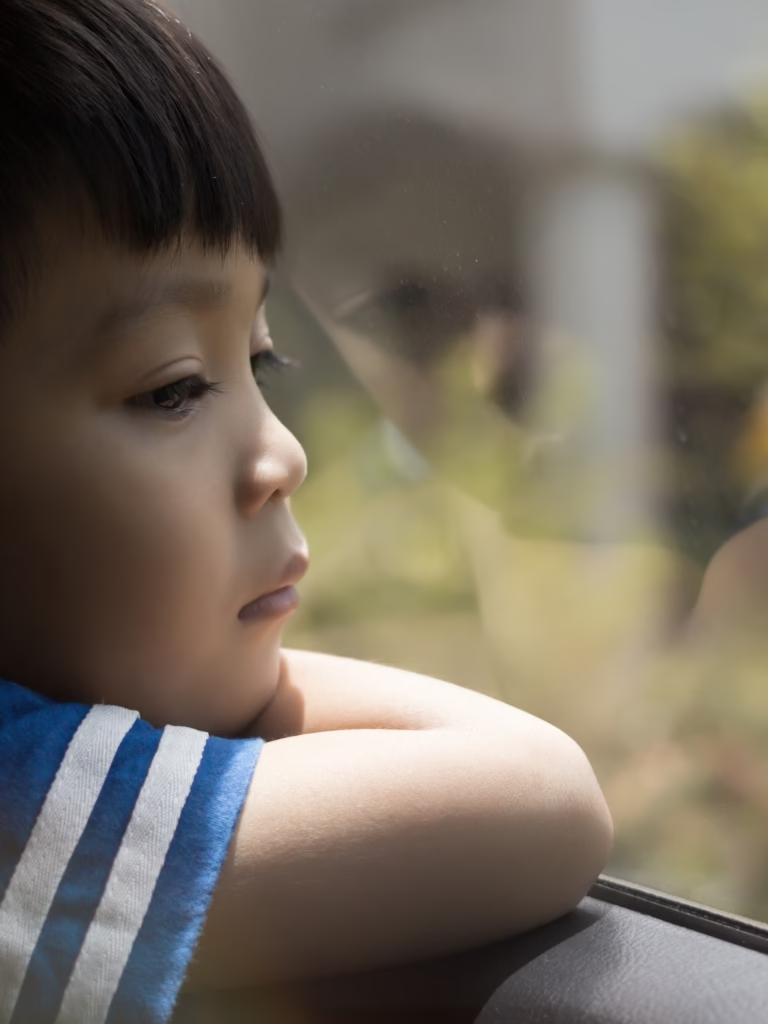
When we think about grief and loss, we often think about the death of someone we love. While that is certainly one form of grief, it’s not the only one. Many of us experienced childhood loss that was never recognized as grief. These losses can take many forms, including:
Childhood loss and ambiguous losses
  • A parent’s divorce or separation
  • The death of a grandparent or another important caregiver
  • Moving away from friends, family, or familiar surroundings
  • Growing up with a parent or family member struggling with addiction
  • Emotional neglect or inconsistent care-giving
  • Living with chronic illness
  • Bullying or peer rejection
  • Growing up in an unpredictable or unsafe home
  • The loss of safety, stability, or innocence
  • The childhood you needed but never had

While each of these experiences is different, they can all represent meaningful losses that deserve to be acknowledged. Many of them can involve ambiguous loss—a loss that is real and deeply impactful, but often lacks clear closure or social recognition. Because these losses aren’t always acknowledged as grief, we may carry their effects without realizing we’re grieving in the first place.

Although these losses happened in childhood, they don’t always stay in the past. They can influence how we experience relationships, respond to conflict, view ourselves, and even what feels safe or familiar. The ways we learned to seek comfort, protect ourselves, or connect with others in childhood often become the blueprint for our relationships in adulthood. Instead of asking, “What’s wrong with me?” we can begin asking, “What happened to me?”

How Children Adapt to Loss

As children, we often don’t have the language or emotional capacity to make sense of our losses. Instead of grieving them, we adapt.

how children adapt to loss

Many of us learn to become independent because asking for help didn’t feel safe. We may become the “responsible one” because someone had to hold things together. Some of us will learn to people-please in an effort to avoid conflict or rejection. We stay emotionally guarded because vulnerability once led to disappointment.

These adaptations are often incredibly resourceful. They helped us survive difficult circumstances.

When Childhood Survival Strategies Follow Us Into Adulthood

The challenge is that the strategies that once protected us can begin to limit us. What helped us survive childhood may make it difficult to trust others, ask for help, or believe we’re worthy of care as adults.

These unresolved losses can show up in ways we don’t immediately recognize. For example, you might notice:

  • Difficulty trusting others or asking for help
  • Fear of abandonment or rejection
  • Feeling responsible for other people’s emotions
  • Believing you have to earn love through achievement or care taking
  • A persistent sense that something is missing, even when life appears to be going well

Childhood loss and impacts into adulthood

This doesn’t mean that every struggle in adulthood is rooted in childhood grief and loss. The human experience is complex, and there are many reasons people may experience anxiety, depression, relationship difficulties, or low self-worth. But for some people, early losses are an important part of the story, especially when those losses were never acknowledged or processed.

Healing Begins by Acknowledging What Was Lost

One of the most powerful aspects of therapy is having a safe space where you can finally acknowledge those losses with compassion. Grieving isn’t about staying stuck in the past. Instead, you can honor what was lost, recognize how those experiences shaped you, and allow yourself to respond with the care and understanding you may not have received at the time.

Healing doesn’t mean forgetting the past or pretending those losses didn’t happen. Rather, it means making space for those experiences to be acknowledged, understood, and integrated so they no longer have to define how we relate to ourselves and others.

Looking at Your Story with Compassion

Childhood Loss and Compassion

When we begin to grieve what was missing—not only who or what we lost, but what we needed and never had—we often discover that through healing we can move forward with greater freedom, self-compassion, and deeper connection to ourselves and others.

If you’ve ever wondered why certain relationship patterns, emotional reactions, or beliefs about yourself seem so difficult to change, it may be worth considering whether there are losses in your story that never had the opportunity to be grieved. Recognizing those losses does not change the past, but it can change the way you understand yourself, and that understanding can become the foundation for meaningful healing.

What childhood loss in your own story may have never been recognized as grief?

If this resonates with you, you’re not alone. Therapy can provide a space to explore these experiences with curiosity and compassion, helping you understand how the past continues to shape the present while supporting meaningful change.

About the Author: Michael Marsteller

Michael Marsteller

Mike Marsteller, MA, NCC, LAPC (he/him/his), has earned his Master’s in Clinical Mental Health Counseling from Messiah University and works with adults navigating trauma, grief, and bereavement, with a particular focus on attachment and early relational trauma.

Mike is especially passionate about helping clients process childhood trauma, navigate grief and loss, and break inter-generational patterns that continue to impact their lives and relationships. Drawing from his experience as a certified grief educator and facilitator of grief support groups for adults and children, he offers a space where grief can be witnessed, honored, and gradually made sense of without pressure to rush the process.

Inner Child Work: Healing from Childhood Trauma

Written by: Dr. Scott Giacomucci, DSW, LCSW, BCD, CGP, FAAETS, TEP

Many adults find themselves struggling with anxiety, low self-esteem, relationship difficulties, perfectionism, people-pleasing, or intense emotional reactions that seem difficult to explain. They may wonder, “Why do I keep reacting this way?” or “Why do I feel like a scared child in certain situations?”

For many people, the answer lies in experiences from childhood.

Inner child work is an approach that helps people reconnect with, understand, and heal the younger parts of themselves that were impacted by painful or unmet childhood experiences. Rather than “living in the past,” inner child work helps us understand how the past continues to influence the present – and how we can begin creating a healthier future.

At the Phoenix Center for Experiential Trauma Therapy, we frequently incorporate inner child work into trauma therapy because lasting healing often requires more than understanding what happened. It involves developing a new relationship with the parts of ourselves that continue to carry emotional pain or have been split off from our adult selves.

What Is Inner Child Work?

Inner child work is the process of exploring, understanding, and healing the emotional experiences, beliefs, needs, and protective strategies that developed during childhood.

The term “inner child” is a way of humanizing the parts of ourselves that continue to carry the wounds, defenses, emotions, and reactivity from the past. It is a way of describing the younger emotional experiences that continue to influence how we think, feel, behave, and relate to others throughout adulthood. Our inner child (or inner children) may carry fear, shame, loneliness, anger, grief, or feelings of pain. At the same time, our inner child may also carry the joy, curiosity, wonder, creativity, and playfulness that we feel like we’ve been disconnected from since the trauma.

When childhood needs for safety, love, acceptance, or emotional support were not consistently met, these experiences often continue to affect adult life in ways we may not fully recognize.

Signs That Childhood Experiences May Still Be Affecting You

Many people seeking trauma therapy don’t initially realize that their current struggles are connected to childhood experiences.

Some common signs include:

  • Feeling easily rejected or abandoned
  • Difficulty trusting others
  • Perfectionism or fear of making mistakes
  • Chronic people-pleasing
  • Harsh self-criticism
  • Difficulty setting healthy boundaries
  • Feeling emotionally “stuck”
  • Strong emotional reactions that seem larger than the situation
  • Fear of conflict
  • Difficulty accepting love or support
  • Persistent feelings of shame or not being “good enough”

These patterns often developed for understandable reasons. They were attempts to adapt to difficult environments, relationships, or experiences.

Why Childhood Experiences Continue to Affect Adults

Children naturally make sense of the world by making sense of themselves. When children experience neglect, criticism, abuse, bullying, loss, or unpredictable caregiving, they often develop beliefs such as “I’m not good enough,” “I have to take care of everyone else,” “It was all my fault,” “My needs don’t matter,” and “If I make a mistake, I’ll be rejected.”

These beliefs may have helped children understand confusing experiences, but they often continue operating long after the original circumstances have changed. When a child can’t fully process or make sense of a complex traumatic experience, they are likely to blame themselves or internalize negative beliefs about themselves from the event.

Inner child work helps identify these beliefs, understand where they came from, and develop healthier ways of relating to ourselves.

What Does Inner Child Healing Look Like?

Many people imagine inner child work as simply visualizing themselves as a child. While imagery can certainly be one part of the process, meaningful inner child healing can go much deeper.

Healing Our Inner Child

Healing often involves:

  • Understanding childhood experiences with greater compassion
  • Recognizing emotional triggers in the present
  • Learning healthier ways to respond to emotional pain
  • Challenging long-held beliefs about yourself
  • Developing self-compassion
  • Grieving unmet childhood needs
  • Building emotional regulation skills
  • Creating healthier relationships
  • Meeting present-day needs in healthier ways

Inner Child Work and Trauma Therapy

Inner child work begins by acknowledging and befriending your inner child. This requires a newfound awareness and understanding of the past wounded parts of self. One of the most important aspects of inner child work is that we interact with our inner child from the perspective of our adult selves. This allows us to integrate the new perspective, information, and compassion between our past and current selves. While inner child work does often involve expressing emotions that were unexpressed from childhood, it does not mean that we encourage uncontained regressing into childlike states.

Healing Inner Child and Trust

Interacting with your inner child may involve changing your internal self-talk, guided visualizations, letter writing and journaling techniques, parts work, somatic techniques, EMDR sessions on past trauma, psychodrama, and empty chair work. Rather than focusing exclusively on symptoms, these approaches help individuals develop a healthier relationship with themselves and the younger parts that continue to carry emotional pain.

For individuals who experienced childhood trauma, neglect, abuse, or attachment wounds, inner child work is often one component of a comprehensive trauma treatment plan. Healing childhood trauma requires more than talking about difficult memories. It often involves helping individuals experience safety, emotional regulation, connection, and self-compassion in ways they may not have experienced growing up. Rather than trying to erase painful experiences, inner child work helps reduce their influence on your current life.

Common Misconceptions About Inner Child Work

“Inner child work means blaming my parents.”
Inner Child Work and Blaming Parents

Inner child work is not about assigning blame. Many caregivers did the best they could with the resources they had. At the same time, acknowledging how childhood experiences shaped us is an important part of understanding ourselves. Healing involves developing awareness, not simply finding someone to blame. Though there is sometimes blame to assign to others for past trauma, the responsibility for healing rests within ourselves.

“I had a good childhood, so I don’t need inner child work.”

Many people experienced loving families while also encountering painful experiences such as bullying, death, grief, medical trauma, emotional neglect, divorce, discrimination, or other significant stressors. Inner child work is about understanding your unique experiences – not comparing your childhood to someone else’s. Avoidance and minimization is actually one of the four symptom clusters of posttraumatic stress disorder.

“Talking about childhood means living in the past.”

The goal of inner child work is not to stay in the past. The goal is to understand how the past continues to influence the present so that you can respond differently moving forward. Inner child work actually helps us recognize the ways that we are already living in the past so that we can heal and integrate those experiences into a healthier adult self. At its core, inner child work helps us stop living in the past.

How the Phoenix Center Can Help

Inner Child Work and Finding the Right Therapist

At the Phoenix Center for Experiential Trauma Therapy, we believe healing occurs through compassionate relationships, meaningful experiences, and developing new ways of relating to yourself and others. Our therapists integrate trauma-informed care with experiential approaches that help clients move beyond simply understanding childhood experiences intellectually. Through therapies such as EMDR, psychodrama, somatic therapy, parts work, and other evidence-based approaches, we help clients process painful memories, strengthen emotional regulation, build self-compassion, and reconnect with the resilient parts of themselves.

Every person’s story is different. Rather than following a one-size-fits-all approach, we tailor treatment to your unique history, strengths, and goals. This often includes integrating multiple modalities into your treatment experience.

Ready to Begin Healing Your Inner Child?

Healing your inner child isn’t about becoming someone different. It’s about reconnecting with the parts of yourself that have always deserved safety, compassion, acceptance, and care. If childhood experiences continue to affect your relationships, emotions, self-esteem, or daily life, you don’t have to navigate that journey alone.

The trauma therapists at the Phoenix Center for Experiential Trauma Therapy provide compassionate, evidence-based treatment to help individuals heal from childhood trauma, strengthen resilience, and create healthier, more fulfilling lives.

Contact us today to learn more about our trauma therapy services or schedule an appointment with one of our experienced clinicians.

About the Author

Blog Written by: Dr. Scott Giacomucci, DSW, LCSW, BCD, CGP, FAAETS, TEP

Dr. Scott Giacomucci, DSW, LCSW, BCD, CGP, FAAETS, TEP (he, him, his) is the Director, Founder, & Owner of the Phoenix Center for Experiential Trauma Therapy. He provides clinical services at the center as well as supervision, consultation, training, and organizational leadership.
Scott’s work has been internationally recognized and he is the recipient of various awards. He frequently presents training workshops at local, national, and international events and has published various articles on using experiential methods (especially sociometry, psychodrama, and group work) in clinical, educational, community, and organizational settings. Most recently, the CEO of NASW commented in a press release that “With social work leaders such as Dr. Giacomucci on the rise I’m assured the social work profession will have an especially bright future.”