

Free Webinar: The Green Light Problem with A. Michael Blanche
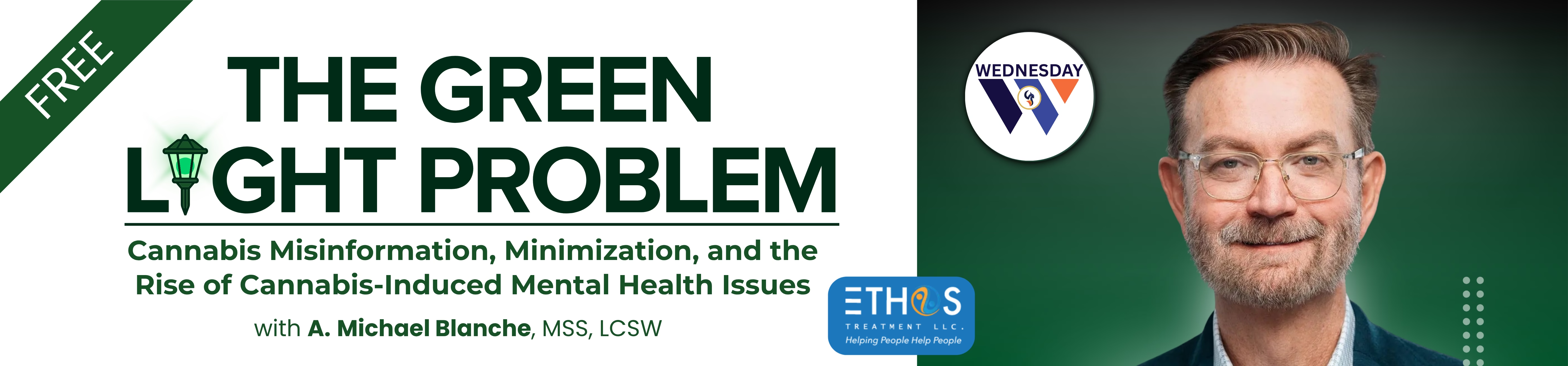
Facilitated by: A. Michael Blanche, MSS, LCSW
Date: Wednesday, September 30, 2026
Cost: Free
Location: Virtual/Zoom
CE Hours: 1 CE Hour for NBCC, PA SW, LPC, LMFT, and Psychologists, PA SW, LPC, LMFT, and Psychologists, PA SW, LPC, LMFT, and Psychologists, PA SW, LPC, LMFT, and Psychologists
About the Workshop
Cannabis use and cultural attitudes toward it have shifted dramatically over the past decade, while public understanding of its psychiatric risks has not kept pace. National survey data show that the percentage of high school seniors who view regular marijuana use as risky has declined significantly over the past two decades, even as the potency of available cannabis products has risen several-fold and clinical evidence linking high-potency, high-frequency use to psychotic disorders has strengthened. In Pennsylvania specifically, the medical cannabis program has grown from zero dispensaries in 2016 to a market of 190+ licensed dispensaries generating billions in annual sales, alongside an unregulated retail layer of hemp-derived intoxicants sold without age verification in many settings. This rapid commercialization has outpaced public health messaging, parental awareness, and — in many cases — clinicians’ own working knowledge of current risk data.
Mental health therapists and trauma specialists are increasingly encountering clients, particularly adolescents and young adults, whose cannabis use is minimized by themselves, their families, or the surrounding culture as low-risk or medically sanctioned. At the same time, emerging clinical and epidemiological research points to a measurable rise in cannabis-induced psychosis presentations in emergency departments and psychiatric units, particularly among daily users of high-potency products. Without current, evidence-based training, clinicians risk either overlooking a significant and growing risk factor in their caseloads or relying on outdated, moralized framing that undermines therapeutic rapport. This course addresses that gap directly.
This session presents a fact-based examination of the misinformation and cultural minimization shaping how cannabis is understood today, with a clinical focus on cannabis-induced psychosis: its presentation, its distinction from primary psychotic disorders, its long-term diagnostic significance, and the population-level trends driving its rise. The course introduces a three-part framework — the erosion of parental disapproval, the expansion of accessibility, and the loss of perceived consequence — to help clinicians understand why risk perception has shifted, using Pennsylvania’s cannabis commercialization timeline as a concrete case study. Participants will review current peer-reviewed research on THC potency trends, psychosis risk ratios, and psychiatric hospitalization data, and will leave with a practical framework for clinical assessment, psychoeducation, and referral.
Learning Objectives
- Identify at least three common cultural and clinical misconceptions about cannabis that minimize its psychiatric risk, and explain the evidence that contradicts them.
- Describe the clinical presentation of cannabis-induced psychosis (CIP), including onset patterns, high-risk populations, and its distinction from primary psychotic disorders.
- Explain the three eroded deterrents (parental consent/disapproval, restricted accessibility, perceived consequence) and how their loss has changed risk exposure for adolescents and young adults.
- Apply a clinical framework for assessing cannabis use, potency exposure, and psychosis risk in session, including when to refer for higher levels of care.

About the Facilitator
A. Michale Blanche, MSS, LCSW, Co-Founder and Chief Clinical Officer of ETHOS Treatment LLC
Continuing Education Hours and Training Credits
Please note that participants must attend the entire training event to receive CE/training credits. Partial credit is unable to be offered.
Credit Hours for Pennsylvania social workers, marriage and family therapists, professional counselors and psychologists:
Phoenix Center for Experiential Trauma Therapy (Lic. #004115) is approved by the Pennsylvania State Board of Social Workers, Marriage and Family Therapists and Professional Counselors to offer continuing education for social workers, marriage and family therapists and professional counselors.
The Phoenix Center for Experiential Trauma Therapy (Lic. # PSY000215) is approved by the Pennsylvania State Board of Psychology to offer continuing education for psychologists. Phoenix Center for Experiential Trauma Therapy maintains responsibility for the program.
National Board of Certified Counselors (NBCC) Credit
Phoenix Center for Experiential Trauma Therapy, LLC has been approved by NBCC as an Approved Continuing Education Provider, ACEP No. 7013. Programs that do not qualify for NBCC are clearly identified. Phoenix Center for Experiential Trauma Therapy, LLC is solely responsible for all aspects of the programs.
The Phoenix Center for Experiential Trauma Therapy is committed to providing exceptional continuing education experiences and assuring fair treatment of all participants. In the event that a participant is not satisfied with their continuing education experience, this statement is provided to offer guidelines for submitting and responding to official grievances.